

Billions of dollars spent, thousands of hours invested, livelihoods and long-term health risked over an epic clash—all hinging on a referee guesstimating the exact location of the ball at the moment its carrier crashes to the ground. Should the spot appear to be close to a first down, a precise measurement is performed.
Stan Honey, the inventor of the yellow first down line now ubiquitous across football broadcasts, has always found this funny.
“It is interesting how accurate the measurements of the chains can be and then how approximate the original spotting of the ball,” he says.
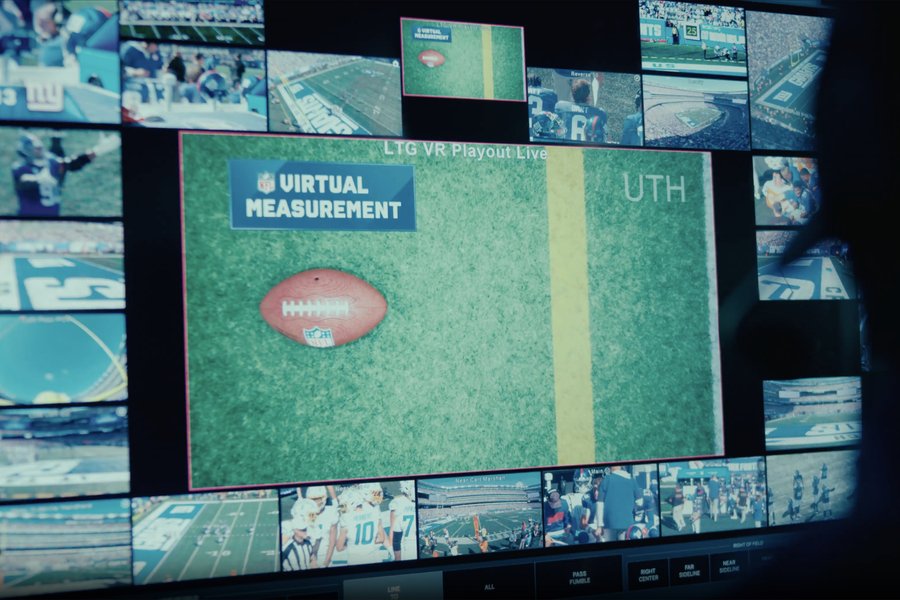
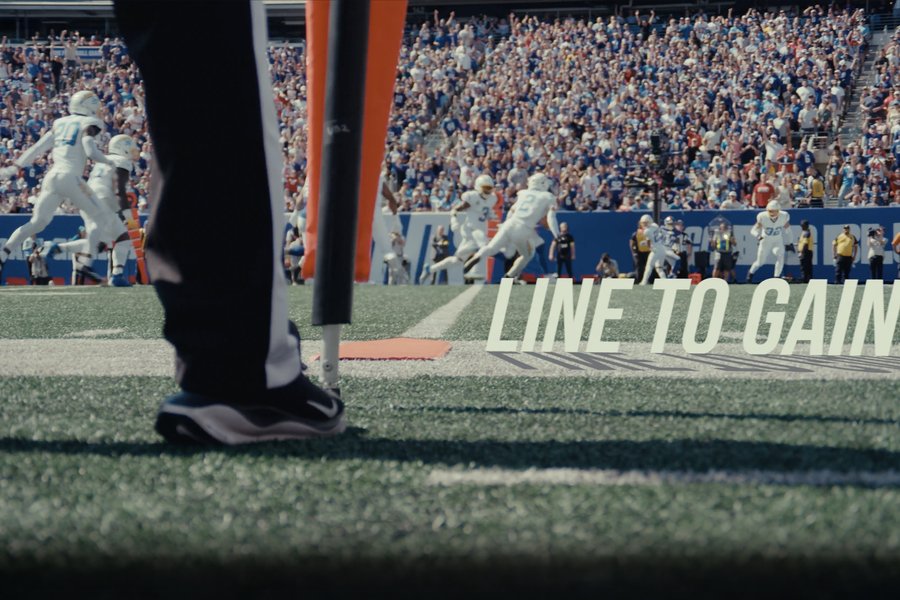
For most of football history, the solemn duty of measuring first downs was carried out by so-called chain gangs: people in bright vests lugging around giant orange sticks. But before this NFL season, the league installed six 8K Hawk-Eye cameras in each stadium to optically track the ball’s position, employing the same technology that has become familiar in other sports. In the blink of an eye, the Hawk-Eye system can judge precisely how far the ball is from the first down line. On Sunday, when the Patriots and Seahawks kick off, the NFL’s virtual measurement system will be used for the first time in a Super Bowl.
Honey is an expert on first down technology if there ever was one. When his first down line launched in 1998, he and his company, SportVision, not only changed how we watch football, but seemed to break down a wall between sports reality and our mediated experience of it.
“We began to hear from people saying, ‘I'm taking my kids to the game, and they're looking for the line on the field,’” says Bill Squadron, who co-founded SportVision with Honey and led its business side.