Have a gathering.
A Workshop
For my gathering, I was interested in using the project to return some kind of agency to the people whose images had been collected into LAION-5B. The project’s image donors were openly invited to participate, and, if they were interested, they were able to set the terms for the use of their image and ask for something in return. Consider what your reason is for bringing people together.
I asked those who wished to take part two things:
- “Please describe who you would like to wear the mask that has your image”
- Provide “a prompt of what you would like the group to ‘generate' for you.”
I was riffing off of the idea that when people use generative AI apps, they are, in a sense, producing images that contain very, very tiny pieces of the faces of everyone in the dataset.
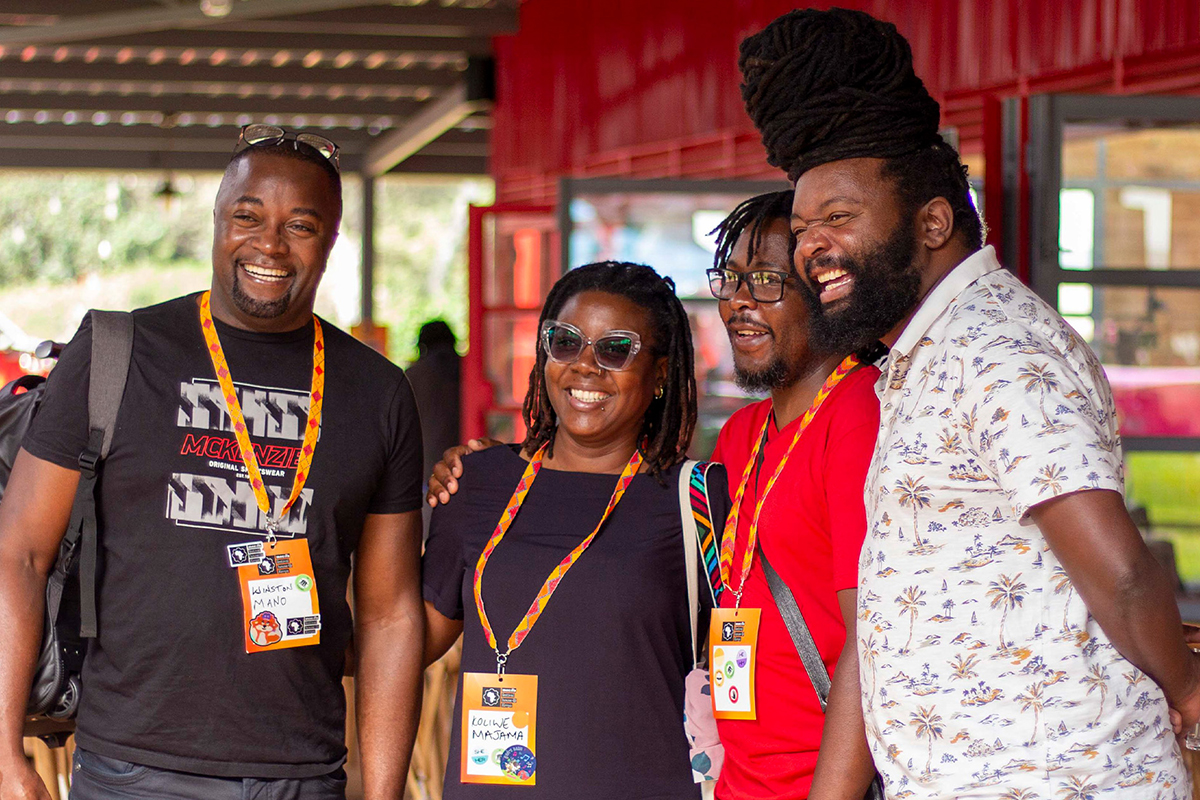
During each gathering, strangers came together to choose masks and collaborate to create responses to these prompts. The gatherings became exchanges between the people whose images were in the dataset—dubbed the “image donors”—and those who wore those images. Together, we modeled an alternative kind of AI dataset- one that centers consent, care and exchange.
Potluck
Generative AI datasets take something that might seem small from each of us in order to accumulate something vast that is stored seemingly indefinitely. Similarly, when we bring dishes to a potluck meal, we each contribute something small, and together we make a feast. But then we eat, we nourish each other, and the thing that we brought is consumed and disappears. Invite the people you meet in the dataset to bring a dish to introduce themselves.
Protest
It’s possible that when you connect with others in the dataset, they will be upset—angry, confused, sad, or overwhelmed. Maybe you’ll want to get organized. Maybe you’ll want to learn more about the laws governing AI and the impact of AI on your community. Maybe you’ll talk about the work of tech justice organizers like the Tech Workers Coalition, or maybe you’ll find local coalitions fighting unethical uses of AI, like the Trust Coalition that I worked with in San Diego. Maybe you’ll join one of these groups or start your own.
After your gathering, think about the rest of the iceberg.
In the United States, we typically have no idea what datasets we are a part of, few methods of consenting (or not) to being a part of those datasets, no say in what those datasets generate and dubious ways of benefiting from them. Some companies give us limited means of opting out.
LAION-5B is just one of the countless datasets that we are a part of, and it is one of the very few that we can examine. We are already gathered in datasets that are maintained by employers, schools, governments, doctors, and businesses small and large. The potential of some of these dataset gatherings to build community and reclaim agency is thrilling.
For instance, what could happen if all the people who Target thinks are pregnant got together, or if all the people who police department’s scanners have marked suspicious got organized? These gatherings can, for the most part, only live as thought experiments in our minds. Most of these datasets are inaccessible to us, even if our inclusion in them has a bearing on our lived experience.
In the interim, let’s keep sending invitations.